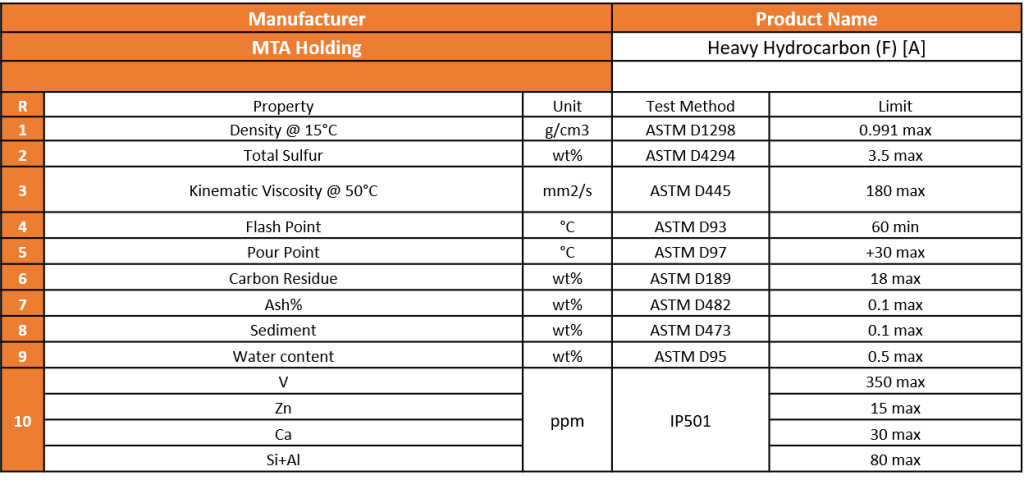
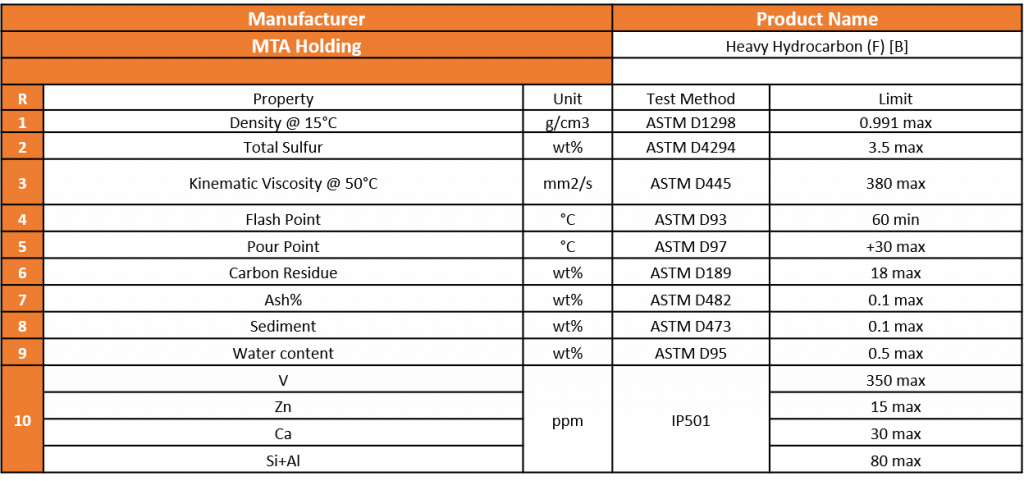
Heavy hydrocarbons are characterized by a density exceeding 0.81 g/cm³ and are primarily used as marine fuel, for tank cleaning, and in various industrial and domestic applications. These compounds have a flash point of at least 40°C and are composed of long-chain hydrocarbons, including alkanes, cycloalkanes, and aromatics, classifying them as heavy industrial substances.
The carbon chain length of heavy hydrocarbons is tailored to their specific application, generally starting from C12 and above. This product serves as a cost-effective fuel for a range of equipment, including bath furnaces, bakery ovens, diesel engines, and certain power plants.
Heavy hydrocarbon cuts are available in standard grades—280, 180, and 380—which are defined by their viscosity. These products are derived from heavier fractions of oil and gas, with their viscosity precisely adjusted using specific oil cuts and compounds to meet application requirements.